Explore our precision-engineered, food-grade, and cosmetic-grade sustainable bottles designed to reduce carbon footprint without compromising on durability or clarity.


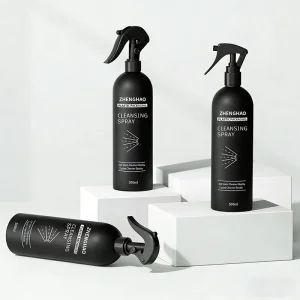

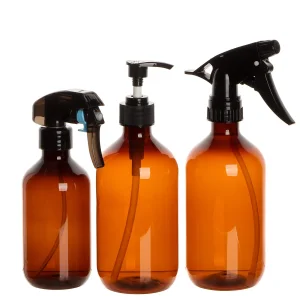


As global environmental awareness reaches an all-time high, the packaging industry is undergoing a structural transition from linear consumption to a circular economy. Post-Consumer Recycled (PCR) plastics have emerged as the cornerstone of this revolution.
Governments worldwide are enforcing strict legislation. The European Union's Packaging and Packaging Waste Regulation (PPWR) and various US state laws (such as California's AB 793) mandate minimum PCR content in plastic packaging, scaling up to 30% by 2030. Non-compliance is no longer an option for global brands.
Utilizing PCR resins significantly decreases greenhouse gas emissions compared to virgin plastics. Manufacturing rPET (recycled polyethylene terephthalate) consumes up to 79% less energy than producing virgin PET, directly contributing to corporate Scope 3 emission reduction targets.
Modern consumers actively seek out brands that demonstrate authentic environmental stewardship. Transitioning to PCR bottles is a highly visible declaration of sustainability, driving customer loyalty, enhancing brand equity, and securing premium shelf space in competitive retail markets.
The industrial demand for Post-Consumer Recycled (PCR) bottles is experiencing exponential growth. Major fast-moving consumer goods (FMCG) conglomerates, cosmetic giants, and pharmaceutical leaders have pledged to transition their packaging portfolios to 100% recyclable or PCR-integrated formats. However, the global supply of high-purity, food-grade PCR material remains highly constrained.
This supply-demand gap requires highly sophisticated sorting and decontamination technologies. Leading factories must implement advanced mechanical recycling processes, including optical sorting, hot washing, and solid-state polymerization (SSP) to ensure the recycled resin meets the rigorous chemical and physical standards required for food contact and high-clarity cosmetic applications.
Furthermore, the integration of PCR materials introduces unique processing challenges, such as maintaining structural integrity, managing color variations, and preventing degradation during extrusion blow molding. Only manufacturers with deep material science expertise and advanced machinery can deliver consistent quality.
Procurement directors and supply chain managers in multinational corporations utilize stringent matrices to evaluate PCR bottle suppliers. E-E-A-T (Experience, Expertise, Authoritativeness, Trustworthiness) is the foundation of long-term OEM/ODM partnerships.
Suppliers must provide Global Recycled Standard (GRS) certificates, ensuring that the PCR content is verified throughout the entire supply chain, preventing greenwashing risks.
For food, beverage, and cosmetic applications, PCR bottles must comply with FDA (Food and Drug Administration) and EFSA (European Food Safety Authority) regulations for food-contact safety.
Procurement requires guaranteed annual capacities. Suppliers must have secured long-term contracts with premium recycling plants to ensure uninterrupted raw material supply.
The ability to customize PCR blend ratios (from 10% to 100% PCR), develop custom molds, and optimize bottle weight to minimize material usage while maintaining performance.

China's manufacturing sector has transitioned from high-volume production to high-precision, automated smart manufacturing (Factory 4.0). This evolution provides global buyers with unparalleled supply chain resilience, rapid prototyping, and cost-efficiency.
At the forefront of this technological shift is Zhejiang Rocket Packaging Technology Co., Ltd., located in the industrial hub of Taizhou City, Zhejiang Province. By integrating IoT-driven production monitoring, automated material feeding systems, and high-speed robotic blow molding lines, we eliminate human error, maximize energy efficiency, and guarantee absolute batch-to-batch consistency.
Our smart factory setup allows us to rapidly scale production to meet sudden surges in demand, while maintaining a highly optimized cost structure. This enables global brands to achieve their sustainability targets without facing prohibitive cost premiums.
Different industries demand distinct physical properties from PCR and PET packaging. We engineer tailored solutions to meet the precise technical requirements of each vertical market.

PET is a non-toxic plastic, which meets the safety requirements of food packaging. It will not react chemically with food to produce harmful substances, which can ensure the safety of food. Our food-grade PCR/PET options undergo rigorous decontamination to guarantee zero migration of volatile organic compounds.
Learn More
The mouth of PET plastic bottles can be closely matched with the bottle cap to ensure that the seasoning will not leak. For example, soy sauce, vinegar and other liquid seasonings, good sealing can prevent spillage during storage and transportation. We offer high-barrier multi-layer co-extrusion technology to protect oxygen-sensitive seasonings.
Learn More
PET is a safe plastic material, which is non-toxic and harmless to the human body and meets the hygiene requirements of beverage packaging. In the process of contact with the drink, no harmful chemicals will be released, which can ensure the safety of the drink. Ideal for cold-press juices, carbonated soft drinks, and mineral water.
Learn More
High transparency: PET plastic bottles have good transparency, which can show the color and texture of cosmetics well. For example, for lipstick, lip gloss and other products, consumers can directly see the color of the product through the transparent bottle, which is convenient to choose their favorite color number; for essence, lotion, etc.
Learn MoreZhejiang Rocket Packaging Technology CO.,Ltd. was established in 2018 with an annual output of over 100 million sets and a construction area of 16,000 square meters. We are located in Taizhou City, Zhejiang Province, China.
We are a food packaging manufacturer specializing in the production of PET plastic bottles. We are committed to the construction of professional brand of "fashion, beauty and cleanliness", always adhering to the concept of "innovation, win-win, integrity and service", and strive to provide our customers with high-quality and more cost-effective plastic products service.
Equipped with 2 domestically leading fully automatic feeding systems, 26 injection blow molding production lines, and 38 injection molding equipment, we ensure an annual production capacity of 100 million sets of packaging containers. Our state-of-the-art facility guarantees that every PCR and PET bottle we produce meets the highest international standards of quality, safety, and environmental compliance.
Learn More About UsOur fully automatic feeding systems and robotic blow molding lines ensure absolute dimensional accuracy and eliminate contamination risks.
We partner with globally certified recyclers to guarantee the purity, safety, and traceability of our post-consumer recycled resins.
From initial 3D CAD design and rapid prototyping to mass production and custom color matching, we provide end-to-end solutions.
Get authoritative answers to the most common technical, regulatory, and commercial questions regarding Post-Consumer Recycled (PCR) bottles and sustainable packaging procurement.
PCR stands for Post-Consumer Recycled. A PCR bottle is manufactured using plastic resins reclaimed from existing plastic packaging (such as water bottles) that have been used by consumers, collected, sorted, cleaned, and reprocessed. In contrast, virgin PET bottles are made from petrochemical-derived raw materials. PCR bottles significantly reduce environmental waste and carbon emissions while maintaining highly comparable physical properties to virgin PET.
Yes. We source food-grade PCR resins that have undergone advanced super-clean recycling processes. These processes are fully compliant with FDA (Food and Drug Administration) and EFSA (European Food Safety Authority) regulations. Our food-grade PCR bottles are completely safe for packaging juices, condiments, water, and other food products, ensuring zero harmful chemical migration.
We offer highly flexible blending capabilities. Depending on your brand's sustainability targets and aesthetic requirements, we can manufacture bottles with PCR content ranging from 10%, 30%, 50%, to 100%. Our engineering team optimizes the blend to ensure that even at 100% PCR, the bottles maintain excellent structural integrity and clarity.
We operate under strict chain-of-custody protocols. All our PCR raw materials are certified under the Global Recycled Standard (GRS). We provide our clients with complete transaction certificates (TCs) and material analysis reports for every production batch, ensuring absolute transparency and protection against greenwashing claims.
High-percentage PCR bottles (especially 100% PCR) may exhibit a very slight grey or yellow tint compared to ultra-clear virgin PET. However, by utilizing premium-grade sorted PCR resins and advanced optical sorting technologies, we minimize these aesthetic variations. For colored or amber bottles (such as shampoo or cosmetic packaging), the difference is completely imperceptible.
Zhejiang Rocket Packaging has a massive annual production capacity exceeding 100 million sets of packaging containers. Our 16,000 square meter facility is equipped with 2 automatic feeding systems, 26 injection blow molding lines, and 38 injection molding machines, allowing us to handle high-volume global contract manufacturing with ease.
Absolutely. We provide comprehensive OEM/ODM services. Our in-house R&D team utilizes advanced CAD software to design custom bottle shapes, sizes, and neck finishes. We offer rapid 3D printing prototyping and precision steel mold fabrication to bring your unique brand packaging concepts to life efficiently.
For standard bottle designs with existing molds, our typical production lead time is 15 to 25 days, depending on the order volume and PCR blend ratio. For custom mold development, the process generally takes 30 to 45 days, which includes mold design, sample prototyping, testing, and final mass production setup.
From high-barrier squeeze bottles to airless cosmetic pumps, discover our diverse portfolio engineered for maximum product shelf-life and premium user experience.



 Rocket Packaging