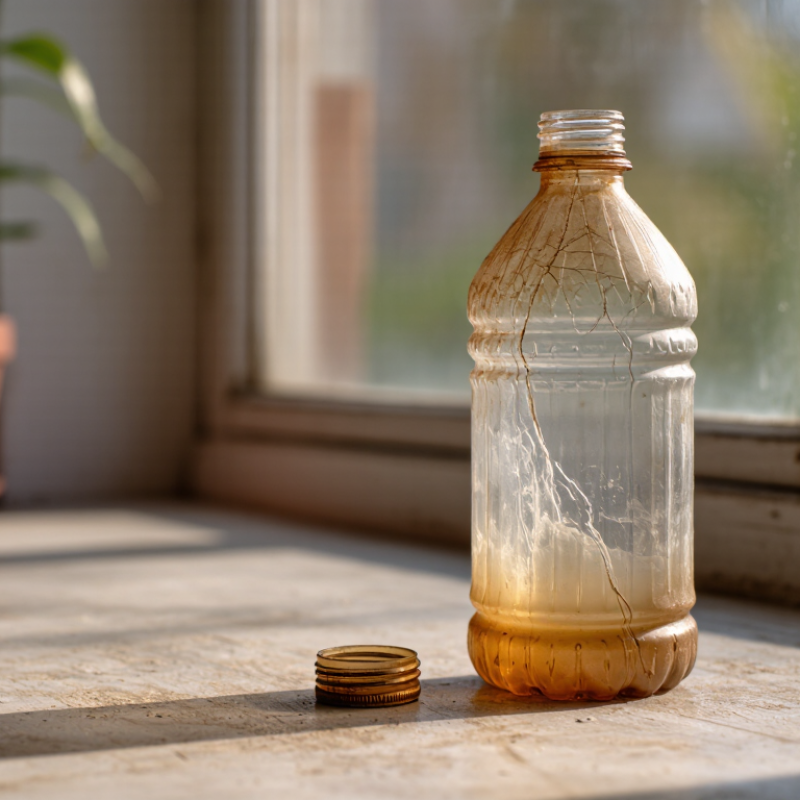
Why do plastic bottles become brittle over time? The answer is rarely one thing. Sunlight, heat, oxygen, repeated squeezing, and aging additives can all affect a bottle’s polymer structure. A clear bottle left on a sunny windowsill may turn yellow, feel stiff, and crack around its shoulder. The change can be gradual. Then, one day, it breaks.
Polymer-weathering expert George Wypych, author of Handbook of Material Weathering, has written about how environmental exposure alters materials. In paraphrase, his work points to a practical warning: sunlight, heat, and oxygen can gradually weaken plastics. This is a paraphrase, not a direct quotation. The distinction matters.
These seven tips explore the clues behind brittle bottles: resin type, ultraviolet exposure, temperature swings, oxidation, chemical contact, mechanical stress, and storage conditions. They also explain what appearance can—and cannot—tell you. A cloudy surface may signal damage, but it does not identify the cause by itself. Nor does every crack mean the same thing. That uncertainty deserves attention.
The goal is useful, not alarmist. Notice where the bottle was stored, how it was used, and whether its texture has changed. Small details help. So does careful doubt. A brittle bottle may reflect several factors working together, rather than a single obvious culprit.
PET, HDPE, and PP do not flex alike. Typical unfilled-grade data in the CAMPUS materials database show tensile moduli of roughly 2.0–2.8 GPa for PET, 0.7–1.5 GPa for HDPE, and 1.0–1.8 GPa for PP; values depend on grade and test conditions (CAMPUS, ISO 527 data). A higher modulus generally means a stiffer material, not necessarily a more brittle bottle. That distinction matters. PET bottles are stretch-blown, which aligns polymer molecules and can make thin walls stiff yet sensitive to damage at scratches or sharp creases. HDPE’s lower stiffness lets many bottles dent and recover more easily.
Structure changes the comparison. Wall thickness, molded ribs, base shape, and material orientation all affect how a bottle bends in the hand. A thick, ribbed PET wall may feel tougher than a thin HDPE wall, though the resin data suggest otherwise. I would not use modulus alone to predict service life; it measures initial stiffness, not repeated-bend endurance. Heat, ultraviolet exposure, and oxidation can gradually damage polymer chains, while detergent residue or a tight crease may add local stress. The result can be a brittle feel, especially around a shoulder or base. Not always. A bottle’s history and geometry matter as much as its plastic type.
Plastic bottles rarely become brittle for one reason alone. Ultraviolet light can break polymer chains near the surface, leaving tiny cracks and a chalky appearance. Heat speeds up oxidation, especially inside a hot car or beside a sunny window. Repeated heating and cooling also create stress between the bottle wall and its contents. The damage may begin before it feels obvious.
Tip 1: Check sunlight exposure. A bottle stored outdoors can weaken faster than one kept in a dark cupboard.
Tip 2: Notice temperature changes. Freezing, warming, and refilling may repeatedly strain thin plastic.
Tip 3: Watch for scratches. Small marks can become fracture points when the container is squeezed.
Tip 4: Avoid harsh cleaners. Some solvents and oils can soften or embrittle certain polymers.
Moisture and air can matter too. Oxygen slowly reacts with vulnerable additives and polymer structures, while humidity may affect labels, closures, or layered materials. In practical inspections, I look for whitening around the shoulders, stress lines near the base, and a sharp cracking sound during gentle handling. That sound is not a reliable test, though. My judgment can be wrong without laboratory analysis. Do not reuse a visibly damaged bottle for demanding storage. Reduce heat, sunlight, abrasion, and chemical contact whenever possible.
Sunlight does more than warm a bottle. Ultraviolet radiation can break polymer chains at the surface, while oxygen helps form chemical groups that make the plastic less flexible. Tiny cracks may then appear around the shoulder, base, or scratched areas. Small changes add up. Heat matters too: it speeds chemical reactions and can make existing damage progress faster, especially when a bottle sits in a hot car or on a sunny windowsill.
ASTM G154, a standard accelerated-weathering test method, includes a commonly used cycle of eight hours of UV exposure at 60°C, followed by four hours of condensation at 50°C. That is a laboratory test cycle, not a prediction of how long a bottle will last outdoors. Real conditions vary with bottle thickness, color, additives, and exposure angle.
Not overnight. A bottle kept in shade may remain sound much longer than one repeatedly heated and cooled in direct sun. Still, the comparison is imperfect: everyday handling adds scratches and stress that a test chamber may not reproduce.
If a bottle turns cloudy, develops fine surface cracks, or feels unusually stiff, treat those as signs of aging rather than relying on appearance alone.
A plastic bottle rarely turns brittle all at once. Look for fine cracks near the base, shoulder, or neck, where the material bends or carries pressure. A pale, chalky patch or white line may appear after repeated flexing. Cloudiness can also develop, though scratches and dried residue may look similar. These signs are clues, not a diagnosis.
Tip: Hold the empty bottle under a bright light and rotate it slowly. Check the cap threads and bottom rim closely. Tiny cracks can hide in grooves. Don’t keep bending the bottle to test it; that may worsen a weak spot. This is easy to misread.
A brittle bottle may feel unusually stiff, make a faint crackling sound, or develop sharp edges around a split.
Stop using it for drinking if you see cracks, leaks, or fragments.
Heat, sunlight, cleaning chemicals, and repeated use can all affect plastic, but the timing varies by material and storage conditions. A cloudy bottle alone does not prove it is brittle.
When the surface change is unclear, compare it with an unused bottle of the same type, if available. Some wear is subtle. A quick visual check cannot reveal every internal weakness.
Plastic bottles can become brittle faster when heat, sunlight, and repeated stress combine. Store them in a cool, dry cupboard, away from windows, radiators, and parked cars. A sunny windowsill is not a harmless display shelf. UV exposure and temperature swings may weaken some plastics over time. Exact effects depend on the resin, bottle design, and prior use.
Keep bottles upright and avoid squeezing them tightly into crowded drawers. Pressure marks matter. Don’t stack heavy items on top; small dents can become stress points. When carrying a bottle, hold its cap or use a sturdy grip instead of twisting the body. Wash with mild soap and lukewarm water, then let it dry fully. Avoid abrasive pads and very hot water unless the care instructions allow them. They can scratch or distort certain plastics. Easy to miss.
Reconsider leaving a filled bottle in a hot bag all afternoon; convenience can hide heat exposure. Check regularly for whitening, fine cracks, cloudy patches, or a cap that no longer seals evenly. These clues don’t identify the plastic or prove it is unsafe, but they can signal wear. Replace bottles that are damaged or no longer fit their intended use, following the care guidance. Storage helps, but it cannot reverse aging already underway.
These are approximate reference values; the exact glass-transition temperature varies by resin grade and additives. Glass transition is a material property, not a recommended storage temperature. Over time, sunlight and UV exposure, heat, oxidation, and repeated stress can contribute to embrittlement. Store bottles away from direct sunlight and excessive heat, and avoid unnecessary impact or squeezing.
Sunlight can damage polymer chains near the surface. Heat speeds oxidation, while temperature swings and repeated use add stress. Several factors may act together.
Look for fine cracks near the base, shoulder, or neck. White stress lines, chalky patches, and sharp edges around splits may also appear. Small clues matter.
Not always. Scratches or dried residue can look cloudy, too. Compare it with an unused bottle of the same type, if available.
Empty it and rotate it under bright light. Check the cap threads, bottom rim, and areas that bend. Don’t squeeze or bend it repeatedly; that may worsen weak spots.
Keep them upright in a cool, dry cupboard, away from windows, radiators, and parked cars. Avoid crowded drawers and heavy items that can press against them.
They can. Wash with mild soap and lukewarm water, then let the bottle dry fully. Avoid abrasive pads and very hot water unless its care instructions allow them.
Stop using it for drinking if you find cracks, leaks, or fragments. Replace bottles that are damaged or no longer suited to their intended use.
No. Visible changes are clues, not a diagnosis, and internal weakness may be hard to spot. I may misread a faint mark, too.
Why do plastic bottles become brittle over time? The answer lies in both the material and its surroundings. Different plastic types and molecular structures affect how flexible a bottle is from the start, while gradual exposure to sunlight, heat, and oxygen can weaken polymer chains. Repeated temperature changes and other environmental stresses may accelerate this process, leaving the material less able to bend without damage.
Early signs of brittleness can include fading, cloudiness, small cracks, a rough surface, or a bottle that feels unusually stiff. Careful storage can help preserve plastic bottles: keep them away from direct sunlight and heat, store them in a cool, dry place, and avoid unnecessary squeezing, bending, or rough handling. These steps may slow deterioration, though they cannot prevent plastic from aging indefinitely.

Rocket Packaging