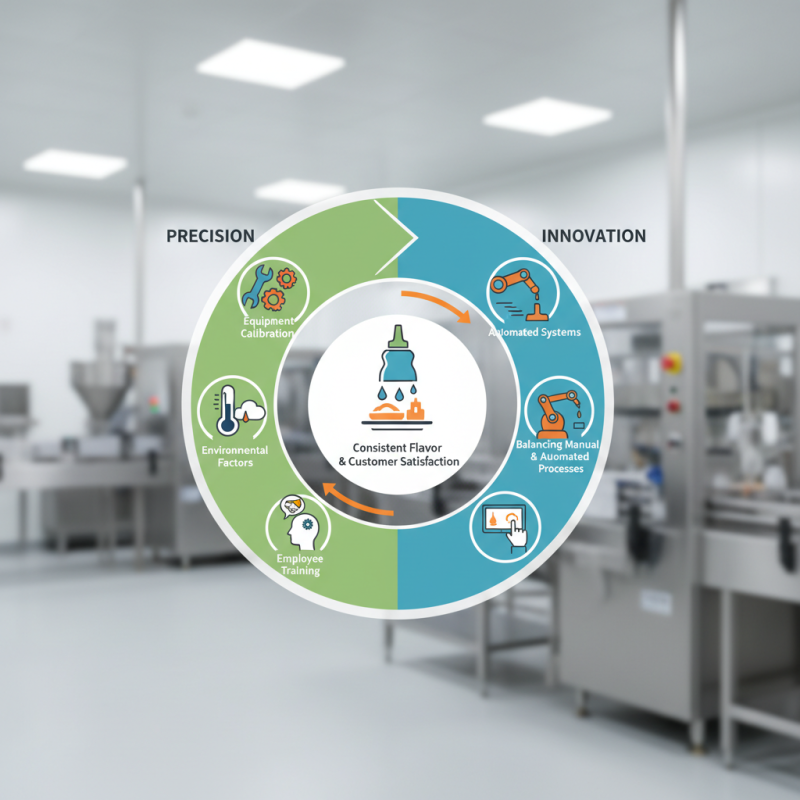
In the world of food production, ensuring precision in dispensing is critical. Many manufacturers face challenges in achieving consistent quality. This is particularly true for sauce and seasoning bottles. To optimize dispensing accuracy for sauce and seasoning bottles, businesses must practice both precision and innovation.
Accurate dispensing affects both flavor and customer satisfaction. Small inconsistencies can lead to deviations in taste, which may disappoint loyal customers. It's crucial to identify the causes of inaccuracy. Equipment calibration, environmental factors, and employee training are just a few elements that can influence performance. Manufacturers should regularly assess these factors to improve accuracy.
Implementing automated systems can help in this regard. However, while technology offers solutions, it is not foolproof. Over-reliance on machines can lead to neglecting human oversight. Balancing both manual and automated processes is essential for optimal results. By refining these methods, companies can enhance their product quality and maintain their reputation in the marketplace.
In food production, dispensing accuracy plays a crucial role. According to a report by the Food and Agriculture Organization (FAO), inaccuracies in dispensing sauces can lead to increased waste and affect flavor consistency. Maintaining precise measurements ensures that each dish meets quality standards. This accuracy not only enhances taste but also strengthens brand loyalty among consumers.
Mistakes in dispensing aren’t just costly; they can impact safety. A study from the Journal of Food Quality highlighted that incorrect ratios can alter food safety parameters. For instance, too much salt can raise health concerns. Therefore, achieving optimal accuracy is essential for every food producer.
To improve dispensing accuracy, implement regular equipment calibration. Ensure your dispensing tools are regularly checked and maintained. Training staff on precise measurement techniques is also vital. Consider using visual aids like marked containers, which can help minimize errors. Lastly, invest in technology like automated dispensers, which offer superior precision and reduce human error.
Dispensing accuracy for sauces and seasonings can greatly influence food preparation. Research indicates that poor accuracy can lead to inconsistencies in flavor, affecting consumer satisfaction. According to a recent industry report by the Food Processing Association, maintaining a dispensing accuracy of 95% or higher can reduce waste and enhance product quality.
Factors such as viscosity and bottle design are crucial. Thicker sauces encounter more resistance during dispensing, impacting the flow rate. Additionally, nozzle design plays a significant role. A nozzle that is too wide may dispense too much product, while a narrow one could lead to clogs. These design complexities require careful consideration in production settings.
Tip: Test different nozzle designs to find the best fit for your sauce's viscosity.
Temperature can also impact accuracy. Colder sauces tend to be thicker, requiring different dispensing techniques. An optimal temperature can guarantee better flow rates and more precise dispensing.
Tip: Consider adjusting storage conditions to maintain ideal sauce temperatures.
Finally, training staff on the proper handling and usage of dispensing equipment can mitigate human errors. A well-informed team can help ensure consistent dispensing practices, minimizing waste and enhancing the customer experience. Balancing these variables invites continuous improvement and reflection on dispensing methods.
Maintaining consistency in dispensing sauce and seasoning bottles is crucial for both quality and customer satisfaction. Precision is key. A well-calibrated nozzle can prevent over-pouring. Frequent calibration checks are necessary. Inconsistent dispensing leads to varying flavors, which can disappoint loyal customers.
Regular maintenance is essential. Check for clogs in the dispensing mechanism. Viscosity can change the flow rate, affecting accuracy. When a bottle is nearly empty, it’s important to monitor dispensing closely. If a bottle isn’t used regularly, the contents may settle. This can create inconsistent flavors.
Training staff is another critical factor. Ensure everyone understands how to operate the dispensers correctly. Mistakes can happen, leading to waste and dissatisfaction. Encourage employees to report any issues with dispensing immediately. Noticing these problems early can help maintain a high standard. Embrace a culture of continuous improvement to refine your processes.
| Best Practice | Description | Impact on Dispensing Accuracy | Frequency of Implementation |
|---|---|---|---|
| Regular Calibration | Calibrate dispensing equipment to ensure precision | High - Reduces variance in dispensed amounts | Monthly |
| Use of Consistent Containers | Ensure all bottles have the same volume and shape | Medium - Prevents differences in fill levels | Ongoing |
| Employee Training | Train staff on proper dispensing techniques | High - Improves handling and operation consistency | Annually |
| Routine Maintenance | Regularly inspect and maintain dispensing equipment | High - Ensures longevity and reliability of machines | Bi-weekly |
| Monitoring Dispensing Performance | Track and analyze dispensing data for accuracy | High - Identifies issues and enables corrective measures | Weekly |
In the food packaging industry, optimizing the dispensing accuracy for sauces and seasonings is crucial. Technological solutions play a significant role in achieving precision. According to a recent industry study, inaccurate dispensing can lead to a 15% increase in waste. This figure highlights the financial and operational impact of poor accuracy. Solutions, such as advanced dispensing nozzles and automated control systems, offer new avenues for improvement. These technologies can reduce dispensing errors by up to 10%.
Implementing smart sensors is another way to enhance accuracy. These sensors monitor flow rates in real time. Industry reports indicate that using smart sensor technology can improve product consistency by 20%. However, integrating such technologies isn't without challenges. Many companies lack the infrastructure to support these systems. Additionally, staff training is essential. Without proper knowledge, the benefits of new technology may not be fully realized. The journey toward better dispensing accuracy is ongoing and requires constant evaluation.
Dispensing accuracy is crucial for the food industry, particularly for sauces and seasonings. Research indicates that inaccuracies can lead to significant losses. A report from the Institute of Food Technologists noted that 5% of product waste comes from dispensing errors. This highlights the need for dependable methods to ensure precision.
Evaluating current dispensing systems is essential. Many companies use traditional pumps, but these might not meet performance standards. A recent survey showed that 30% of restaurants reported issues with uneven dispenses. Adjusting or upgrading to more advanced systems can improve reliability. Technology has evolved, offering pumps with precise calibrations. Such upgrades can reduce waste and enhance customer satisfaction.
Implementing a feedback loop is a critical aspect of optimizing dispensing. Gathering data on usage can help identify patterns in inaccuracies. While some systems are effective, not every setup works for all sauces. Regularly analyzing performance allows businesses to adjust methods accordingly. Awareness of common pitfalls ensures better outcomes, promoting an environment where continuous improvement is prioritized.
: Viscosity, bottle design, and nozzle design significantly impact dispensing accuracy.
Thicker sauces face more resistance, affecting flow rates and accuracy during dispensing.
A wide nozzle may dispense too much, while a narrow one can cause clogs.
Colder sauces are thicker, requiring adjustments in dispensing techniques to improve accuracy.
Proper training helps minimize human errors, ensuring consistent dispensing practices.
Smart sensors monitor flow rates in real time, leading to a 20% improvement in product consistency.
Lack of infrastructure and need for staff training can hinder the effective use of these technologies.
Poor accuracy can increase waste by up to 15%, affecting costs and quality.
Ongoing assessment allows for improvements and adaptation of dispensing techniques over time.
Test various nozzle designs to match the viscosity of your sauce effectively.
Optimizing dispensing accuracy for sauce and seasoning bottles is crucial for ensuring product quality and maintaining customer satisfaction in food production. This process begins with understanding the significance of dispensing accuracy, as it directly impacts flavor consistency and portion control. Several factors can affect this accuracy, including equipment calibration, environmental conditions, and operator training.
To maintain consistency in dispensing, best practices such as regular maintenance of dispensing equipment and standardized operating procedures should be implemented. Additionally, leveraging technological solutions like precision dispensers and automated systems can significantly enhance dispensing precision. Evaluating and adjusting dispensing methods periodically is essential to achieve optimal performance and address any variances, ultimately leading to improved productivity and product quality in the food industry.

Rocket Packaging