Before buying, learn How to check the quality of plastic bottles through simple, observable checks. A bottle may look clean while hiding weak walls, poor sealing, or unsuitable plastic. Packaging expert Walter Soroka describes packaging as “the science, art, and technology of enclosing and protecting products.” That principle matters at the shelf, not only inside a factory.
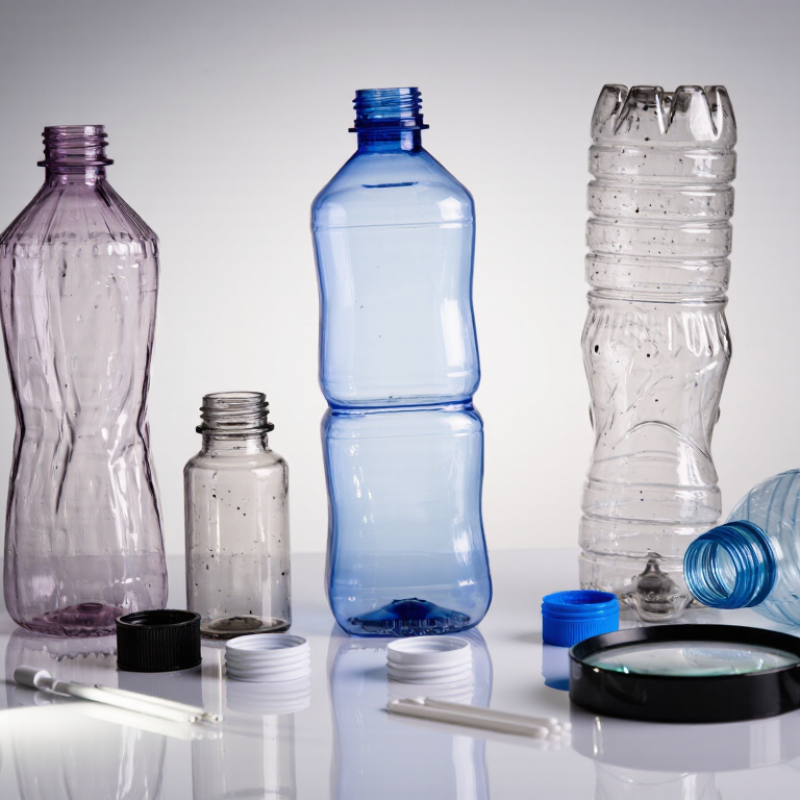
Hold the bottle under bright light. Look for uneven walls, cloudy streaks, black specks, bubbles, or sharp flash around the neck. These details can indicate poor molding or inconsistent production. Press the side gently. It should flex slightly, then recover without permanent dents or whitening. Excessive softness is not always a defect, but it deserves questions.
Inspect the neck and threads carefully. The cap should close smoothly and sit evenly. Try a small leak test with water. Turn the bottle upside down for several minutes. Watch the cap, shoulder, and base. A slow leak can reveal an imperfect seal.
Check the resin identification code and the intended use. Food, cosmetic, pharmaceutical, and household applications may require different materials and barrier properties. Ask the supplier for material specifications, batch records, and relevant quality reports. Reliable manufacturers should explain wall thickness, closure compatibility, and testing methods clearly.
Smell the empty bottle. A strong chemical odor is a warning sign, though odor alone cannot prove safety. I have seen attractive bottles fail because their caps warped during storage. Appearance can mislead. Testing is better.
No visual inspection is perfect. For important products, request migration, drop, pressure, and dimensional testing from a qualified laboratory. The cheapest bottle may become the most expensive after leaks, returns, and damaged trust.
Before buying a plastic food bottle, identify the resin code molded into its base. Look for the recycling triangle with number 1, which means PET, or number 2, which means HDPE. PET bottles are usually clear, smooth, and stiff. They suit many water, juice, and other cold beverage containers. HDPE bottles often look cloudy or opaque. They feel slightly softer and resist impact well, making them common for milk, sauces, and household food liquids.
The code is useful, but it does not prove complete safety. Check whether the bottle is specifically described for food contact. Reliable suppliers should provide material specifications, production information, and suitable temperature guidance. Do not assume every bottle handles hot filling. That mistake is easy. Inspect the mouth, threads, base, and sidewalls under bright light. Reject bottles with sharp flashing, uneven seams, deep scratches, dents, or a strong chemical smell. A cap should close evenly without wobbling.
I also check whether the bottle returns to its shape after gentle pressure. Excessive softness may suggest unsuitable thickness or poor storage. PET should not look hazy unless its design requires it. HDPE may naturally appear milky, but dark spots or streaks deserve questions. A clean appearance is not enough. Resin identification can be missed when the mark is faint, and a quick visual check cannot replace supplier documentation. Keep samples from the same batch when quality matters, because small production differences can become obvious during filling.
| Quality Check | #1PET | #2HDPE | What to Check Before Buying |
|---|---|---|---|
| Resin identification | Polyethylene terephthalate, identified by recycling code #1. | High-density polyethylene, identified by recycling code #2. | Look for a clearly molded resin code on the base or lower body. The code identifies the plastic type, but it does not by itself prove food-contact approval. |
| Typical food and beverage uses | Commonly used for water, soft drinks, juice, and other clear beverage bottles. | Commonly used for milk, juice, condiment, household-food, and opaque beverage containers. | Choose a bottle designed for the specific food or beverage. Check the product description, packaging information, or supplier declaration for intended use. |
| Appearance and clarity | Usually clear or transparent, allowing the contents to be viewed. | Usually translucent or opaque and may have a naturally milky appearance. | Reject bottles with unexpected cloudiness, dark discoloration, embedded particles, streaks, or inconsistent color that may indicate contamination or poor processing. |
| Surface condition | The surface should be smooth and free from cracks, deep scratches, sharp flash, or rough edges. | The surface should be uniform and free from cracks, splits, pinholes, sharp flash, or rough edges. | Run clean fingers around the neck, shoulder, body, and base. Do not purchase containers with defects that could affect hygiene, strength, or handling safety. |
| Wall thickness and consistency | Walls should look even, with no unusually thin areas, dents, or severe deformation. | Walls should be reasonably even and firm, with no weak spots, severe dents, or distortion. | Compare several bottles from the same package. Large differences in weight, thickness, or shape can indicate inconsistent manufacturing. |
| Neck and opening | The neck should be round, stable, and free from cracks or deformation. | The neck should be firm, evenly formed, and free from splits or distortion. | Check that the opening is clean and that the cap fits smoothly without cross-threading. A damaged neck may prevent a reliable seal. |
| Cap and seal compatibility | A compatible cap and tamper-evident seal should close evenly without leakage. | A compatible cap and tamper-evident seal should close evenly without leakage. | Inspect the liner, closure, and tamper band. If the package is prefilled, do not buy it when the seal is broken, loose, swollen, or leaking. |
| Odor check | A strong chemical, solvent-like, or unusual odor is a warning sign. | A strong chemical, solvent-like, or unusual odor is a warning sign. | Food-contact bottles should not impart an abnormal odor. Avoid containers with persistent off-odors, especially when the intended contents are sensitive to smell. |
| Flexibility and firmness | It should recover reasonably from normal handling without cracking or collapsing unexpectedly. | It should feel appropriately firm for its design and should not crack, split, or remain severely deformed after light handling. | Do not excessively squeeze or twist an empty bottle. The goal is to identify obvious weakness, brittleness, or damage without compromising the container. |
| Temperature suitability | Often selected for cold or ambient beverages; suitability for hot filling or heating depends on the specific bottle design. | Often used for cold or ambient foods and beverages; suitability for hot filling depends on the specific grade and container design. | Follow the stated temperature limits. Do not assume that a resin code means the bottle is suitable for boiling liquids, microwaving, or repeated heating. |
| Light and oxygen protection | Clear PET provides limited protection from light and may not be suitable when the product requires strong barrier protection without additional design features. | HDPE is generally more opaque and can provide more light shielding than clear PET, but barrier performance varies by formulation and structure. | Match the bottle to the product. Light-sensitive or oxygen-sensitive foods may require an opaque, colored, multilayer, or otherwise specialized container. |
| Food-contact information | The resin code alone does not confirm that the bottle is approved for food contact. | The resin code alone does not confirm that the bottle is approved for food contact. | Look for food-contact wording, a relevant compliance statement, or supplier documentation. Packaging intended for food should be clearly identified for that purpose. |
| Recycled-content claim | May contain recycled content, but the amount and suitability must be confirmed by the product documentation. | May contain recycled content, but the amount and suitability must be confirmed by the product documentation. | Do not infer recycled content from the resin number. Check the exact recycled-content claim and whether the material is approved for the intended food-contact use. |
| Reuse considerations | Many single-use beverage bottles are not designed for repeated washing, heating, or long-term reuse. | Some HDPE containers are more durable, but reuse is still limited by the bottle design, closure, cleaning ability, and manufacturer instructions. | For repeated use, choose a bottle specifically labeled and designed for reuse. Discard any bottle that becomes cracked, scratched, cloudy, distorted, or difficult to clean. |
| Storage and transport damage | Check for crushing, pressure marks, sun exposure, and deformation that could reduce performance. | Check for crushing, punctures, stress whitening, sun exposure, and deformation that could reduce performance. | Inspect the full package, not only one bottle. Avoid products stored near excessive heat or direct sunlight when the packaging shows heat-related distortion. |
| Final buying decision | Best suited when a clear, lightweight bottle is appropriate and the container is intact and documented for the intended food or beverage. | Best suited when a more opaque, firm container is appropriate and the container is intact and documented for the intended food or beverage. | Buy only when the resin, intended use, physical condition, closure, and food-contact information all match the product requirements. |
Check the molded recycling triangle on the base. Number 1 means PET, while number 2 means HDPE. PET is usually clear and stiff. HDPE often looks cloudy and feels slightly softer.
No. The code identifies the material only. Confirm food-contact suitability through supplier specifications, production details, and temperature guidance. Do not assume hot filling is acceptable.
Inspect the mouth, threads, base, and sidewalls under bright light. Reject sharp flashing, uneven seams, deep scratches, dents, or strong chemical smells. Dark streaks also need explanation.
Close the cap several times. It should sit evenly without wobbling. A loose closure may cause leakage during transport or filling.
Apply gentle pressure to the sidewall. The bottle should return to its shape. Excessive softness may indicate weak thickness or poor storage. This test is useful, but not enough.
Use a calibrated digital scale. Weigh several empty bottles from different cartons. Record the average, not just the lightest sample. I once checked only three bottles. That was not enough.
Fill samples with water to the specified line. Measure the volume using a graduated container. Keep the water temperature stable. Check both usable capacity and overflow capacity.
Use an ultrasonic thickness gauge when available. Measure the shoulder, middle wall, base, and neck area. Rotate each bottle during testing. A smooth side can hide a weaker side.
Record sample locations, equipment calibration, measurements, and test conditions. Repeat questionable results before approval. Measurements may disagree. That deserves a second check.
How to check the quality of plastic bottles begins with identifying the resin type and confirming that it suits the intended use. For common food and beverage packaging, #1 PET and #2 HDPE are widely used options. Buyers should also verify food-contact compliance under FDA 21 CFR 177 and EU 10/2011 requirements. A careful visual inspection should cover clarity, color consistency, seams, threads, and the bottle base to detect cracks, deformation, contamination, or other visible defects.
Quality should also be checked against the purchase specifications by measuring bottle weight, capacity, and wall-thickness uniformity. Request test documentation showing that overall migration is within the limit of 10 mg/dm² where applicable. Performance testing under ASTM D4991, ASTM D2463, and ASTM D2659 can further evaluate leakage resistance, impact behavior, and container durability. Combining material verification, dimensional checks, visual inspection, compliance documents, and performance testing helps ensure the bottles are safe, consistent, and suitable for their intended application.

 Rocket Packaging